The 7 Most Common Contractor Scams in 2026 (and How to Avoid Each One)
These 7 contractor scams cost homeowners $2,000-$25,000 each. A 20-year industry veteran explains how each one works and how to shut it down.
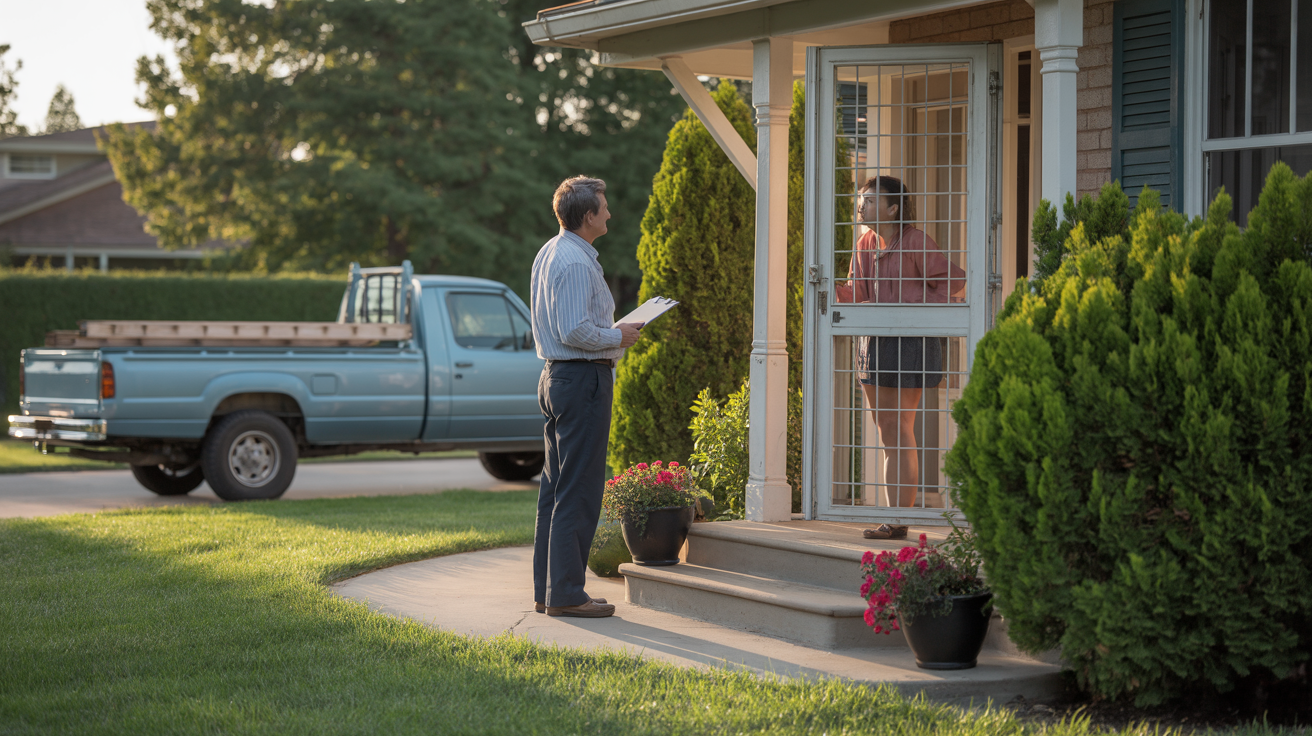
Contractor scams cost American homeowners billions every year, and the tactics haven't changed much. The delivery has gotten smoother. The scripts are more polished. But the underlying plays are the same ones I've been watching for two decades.
An elderly homeowner down my street lost $12,000 to a traveling crew last spring. They took a 50% deposit to "secure materials," delayed for three weeks, then disappeared. The company was registered in another state. No local license. No local address. By the time she filed a complaint with the contractor board, the crew had moved two cities over and started the same play again.
That's scam number one. Here are the other six, plus how to shut down each of them.
I put together a one-page defense system that covers all 15 scam tactics I've documented. Grab the free Contractor Defense Checklist if you want the complete reference. Let me walk you through the top 7.
Scam 1: The Deposit-and-Disappear
How it works: Contractor asks for 40-50% upfront to "secure materials" or "reserve your spot in the schedule." They delay for weeks with excuses. Then they vanish. Company was registered in a different state. You can't find them.
Dollar impact: $2,000-$12,000. Sometimes more on large projects.
Who gets targeted: Elderly homeowners disproportionately. They're less likely to escalate to the contractor board or pursue legal action.
How to stop it: Never pay more than 10-30% as a deposit. Verify the contractor's local license and physical address before writing a check. Pay by credit card when possible (chargeback rights are your insurance policy). Tie every payment after the deposit to a completed milestone, not a date.
Scam 2: The Free Inspection Play
How it works: Contractor offers a "free roof inspection" (or HVAC check, or foundation assessment). They climb up and always find damage. Always. Because their commission depends on it. By the time they come down with a clipboard and a quote, you feel obligated to use them. You can't verify if the damage is real because you never documented your roof before they got up there.
Dollar impact: $5,000-$25,000 in unnecessary or inflated work.
How to stop it: Document your property before any contractor touches it. Phone photos from the ground, attic shots looking for daylight through decking. That's your baseline. When the inspector comes down with findings, you compare against your baseline. No baseline, no way to verify.
Biggest mistake homeowners make: they let the contractor who shows up first also be the one who "finds" the damage. That's handing over the diagnosis and the prescription to the same person who profits from both.
Scam 3: The Insurance Inflation Play
How it works: After storm damage, contractor says "I'll waive your deductible." Sounds generous. What's actually happening: they inflate the insurance claim to cover your waived deductible. You're an unknowing participant in insurance fraud. If your insurer catches it (and insurers are getting sophisticated about detection), your policy gets cancelled. Not the claim. The entire policy.
Dollar impact: Your deductible ($1,000-$5,000) might be "saved," but policy cancellation costs $10,000-$30,000 over the next 3-5 years in higher premiums or inability to get coverage.
How to stop it: File your own claim first. Get the adjuster's scope of work. Then compare it to contractor quotes. Never let a contractor handle your insurance claim. And never, ever accept a deductible waiver.
Scam 4: The Phantom Material Billing
How it works: Contractor charges for materials not installed, or charges premium prices for standard materials. One homeowner I worked with physically counted fascia boards after a roofing job. Found 40-50% of them were only painted, not replaced. The contractor admitted it when confronted with the physical count. Credited back $1,000 but kept $5,800 of inflated charges.
Dollar impact: $1,000-$6,000 per project.
How to stop it: Request the supplier invoice for materials. Call the supplier directly to verify quantities and pricing. The average materials markup on residential roofing is 15-20%. I've seen invoices with 60% markups. A $4,200 materials bill marked up to $6,700. That homeowner had no idea because they never asked for the receipt.
I'm not saying markup is wrong. Contractors haul, store, and manage materials. 15-25% is standard. 60% is theft in a hard hat.
The full checklist covers the defense for all 15 scam tactics I've documented, with the specific questions to ask and the red flags to watch for at each stage. Download the Contractor Defense Checklist here.
Scam 5: The Bait-and-Switch Crew
How it works: The contractor who gave you the quote and earned your trust sends a completely different crew to do the work. The crew is a subcontractor operating under the GC's license. They may be less skilled, less supervised, and less accountable than the person you shook hands with.
Dollar impact: Varies. Poor workmanship can cost $3,000-$15,000 in remediation.
How to stop it: Ask during the quote process: "Will you personally supervise this job, or will a crew handle it?" If a crew, ask who the foreman is and request their name in the contract. Include a clause that requires the named supervisor to be on-site during critical phases.
Scam 6: The Permit Skip
How it works: Contractor suggests skipping the permit to "save you money and time." A building permit costs $100-$400. Skipping it saves the contractor an inspection. Unpermitted work costs $5,000-$20,000 to remediate when you try to sell the house. The lender won't approve the buyer's mortgage until unpermitted work is fixed or removed. That's a 50x penalty for a $400 permit.
Dollar impact: $5,000-$20,000 at resale. Plus potential insurance coverage gaps.
How to stop it: Ask one question: "Will this project require a permit?" Then verify with your local building department directly. Don't take the contractor's word for it. If the project requires one and the contractor suggests skipping it, that's your signal to find a different contractor.
Scam 7: The Verbal Warranty
How it works: Contractor promises a 10-year warranty while shaking your hand. The contract has no warranty language whatsoever. 18 months later, the roof leaks. You call the number. It's disconnected. Or the company has renamed itself. Without the warranty in writing, you've got nothing.
There are two types of roofing warranties: manufacturer warranty (covers the shingles failing) and workmanship warranty (covers the installer making mistakes). The manufacturer warranty means nothing if the installation was botched. You need both, and you need both in writing.
Dollar impact: Full cost of repair, $2,000-$15,000.
How to stop it: Ask this exact question: "What does your workmanship warranty cover, and what does it exclude?" Then shut up and let them talk. If they stumble or get vague, walk. And require the warranty terms, in plain language, in the contract. Not a separate document. In the contract.
What We Tested: The 5-Minute Background Check
After 20 years of watching these plays, I developed a 5-minute pre-hire check that screens out about 80% of problem contractors. Five things:
- License number lookup on your state board website (2 minutes)
- Insurance verification call (3 minutes)
- Google the company name + "complaints" or "BBB" (30 seconds)
- Check for a physical address, not a P.O. box (30 seconds)
- Ask for two recent customer references and actually call them (varies)
Steps 1-4 take under 5 minutes. Most homeowners skip all of them. The ones who don't almost never end up in my inbox asking for help after a scam.
Frequently Asked Questions
What should I do if I've already been scammed? Document everything: receipts, photos, texts, contracts. File a complaint with your state contractor licensing board. File a police report (this is fraud). Check if the contractor has a bond you can file against. Consult a construction attorney for claims over $5,000.
Are storm chasers always scammers? No. Some out-of-town roofing crews are legitimate operations that follow storms and do honest work. But the scam rate is significantly higher among unsolicited door-knockers after storms. Verify their license, insurance, and local presence before engaging.
How do I report a contractor scam? State contractor licensing board (first), Better Business Bureau, your state's attorney general consumer protection division, and local police. The licensing board is most likely to result in action.
Do online reviews help spot scammers? Somewhat. But review manipulation is common. Look for patterns: multiple 5-star reviews posted the same week, generic language, no project details. Reviews that mention specific project types and dollar amounts are more trustworthy.
Can I get my money back from a contractor scam? Sometimes. Credit card chargebacks (if you paid by card), bond claims, small claims court (under $10,000 in most states), and civil lawsuits are all options. Recovery rates are highest when you paid by credit card and filed within 60 days.
I post scam alerts and defense tactics on X every week. Follow me at @beforeyouhire23 to stay ahead of the plays.
The Contractor Defense Checklist covers all 15 scam tactics with specific defense scripts, the 5-minute background check process, and the contract clauses that shut down the most common plays before they start. Download it free here.
Mike Harmon