How to Read a Contractor Quote in 5 Minutes (Without Getting Ripped Off)
Most homeowners glance at the bottom number and miss the details that cost them thousands. Here's how to audit any contractor quote in 5 minutes.
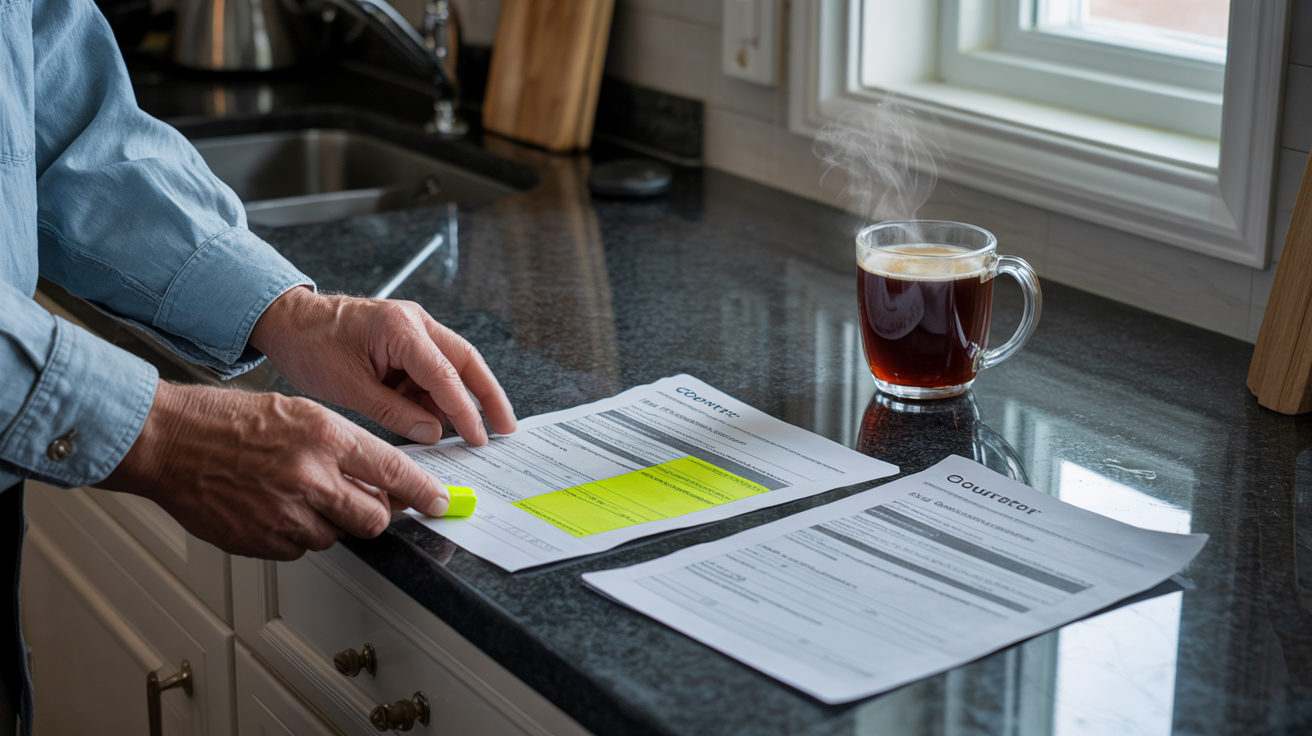
A contractor hands you a quote. You look at the total. Maybe you compare it to one other quote. Then you pick the cheaper one.
That's how most homeowners do it. It's also how most homeowners get overcharged by $2,000 to $8,000.
The total doesn't tell you anything useful. Two quotes for $14,000 can contain completely different scopes of work, different materials, different warranty terms. I've seen a "cheaper" quote end up costing $6,000 more than the "expensive" one because of what wasn't included.
Here's how I read every contractor quote. Takes about five minutes once you know what to look for.
Step 1: Check if Materials and Labor Are Separated
If the quote is one lump number with no breakdown, that's your first red flag. You have no way to know if you're paying $4,000 for materials and $10,000 for labor, or $8,000 for materials and $6,000 for labor.
Why it matters: material costs are verifiable. You can look up what 30 squares of architectural shingles cost at a supplier. Labor rates vary, but they should be in a reasonable range for your area. When they're bundled together, the contractor can hide a 300% material markup and you'd never know.
Ask this exact question: "Can you break out materials and labor as separate line items?"
A good contractor already does this. A contractor who refuses is usually hiding the markup.
Step 2: Look for the Word "Estimated"
This is the most expensive word in home improvement. "Estimated cost: $14,200" sounds like a price. It's not. It's a suggestion.
"Estimated" means the final bill can be higher. I reviewed a quote last Tuesday where the HVAC contractor's "estimate" of $9,800 turned into a final invoice of $13,400. The homeowner had no legal standing to dispute it because the quote never said "fixed price."
Look for these safer phrases:
- "Fixed price" or "firm price"
- "Not to exceed $X"
- "Total cost, inclusive of all labor, materials, and fees"
If you see "estimated," ask the contractor to convert it to a not-to-exceed number. Most will. The ones who won't are planning to bill you more.
I put together a free checklist that covers exactly what to look for in any contractor quote, line by line. Grab it here.
Step 3: Find What's NOT in the Quote
This is where most of the money hides. The quote covers the obvious work. The items below are almost never included unless you specifically ask:
- Permits and inspections ($200-$1,500 depending on project)
- Debris removal and dump fees ($300-$800)
- Equipment rental (scaffolding, dumpsters, lifts)
- Subcontractor work (electrician, plumber called in mid-job)
- Final cleanup
- Touch-up or finish work
Add those up and you're looking at $1,000 to $3,000 in costs that show up on the final invoice as "additional charges." Ask upfront: "Does this quote include permits, disposal, equipment rental, and cleanup? If not, what are those costs?"
Step 4: Compare Scope, Not Price
Three quotes for a bathroom remodel:
- Contractor A: $18,000
- Contractor B: $14,500
- Contractor C: $22,000
Most people pick B. But when I normalized these quotes for a client:
- Contractor A: new tile, new vanity, new fixtures, new subfloor, permits included
- Contractor B: new tile over existing, keeps old vanity, basic fixtures, no permit
- Contractor C: everything in A plus waterproofing membrane and 5-year warranty
Contractor B was the most expensive per unit of actual work. And the skipped permit would have cost my client $4,000 when she sold the house two years later.
Normalize quotes to the same scope before comparing. List every item from all three quotes in a simple spreadsheet. Mark which contractor includes it and which doesn't. The cheapest quote almost always has the most missing items.
Step 5: Check the Payment Terms
The payment schedule tells you how confident the contractor is in their work.
- Red flag: 50% upfront. This means the contractor needs your money to buy materials, which means they're cash-flow negative. If they disappear mid-job, you've lost half the project cost.
- Acceptable: 10% deposit, milestone payments tied to completed work, 10% holdback for 30 days after completion.
- Good sign: Contractor offers a payment schedule without being asked.
Never pay the final 10% until you've done a walkthrough and confirmed everything is done. That holdback is the only reason the contractor will come back to fix the bathroom door that sticks or the outlet cover that's crooked.
One More Thing
Get three quotes minimum. Not because the cheapest wins, but because three quotes expose the outliers. If two contractors quote $12,000 and one quotes $7,500, the low bid is either cutting corners or planning to upsell you mid-job.
If you want the complete system for vetting contractor quotes, checking backgrounds, and protecting yourself through the entire project, download the free Contractor Defense Checklist. It has the quote audit template, all 10 screening questions, and the payment milestone structure ready to use. Download it here.
I post contractor vetting tips on X every week. Follow me at @beforeyouhire23.
Mike Harmon