HVAC Repair vs Replacement: How to Tell If Your Contractor Is Upselling You
HVAC repair costs $150-$500. A replacement costs $5,000-$25,000. Here's how to tell if your contractor is pushing an unnecessary replacement.
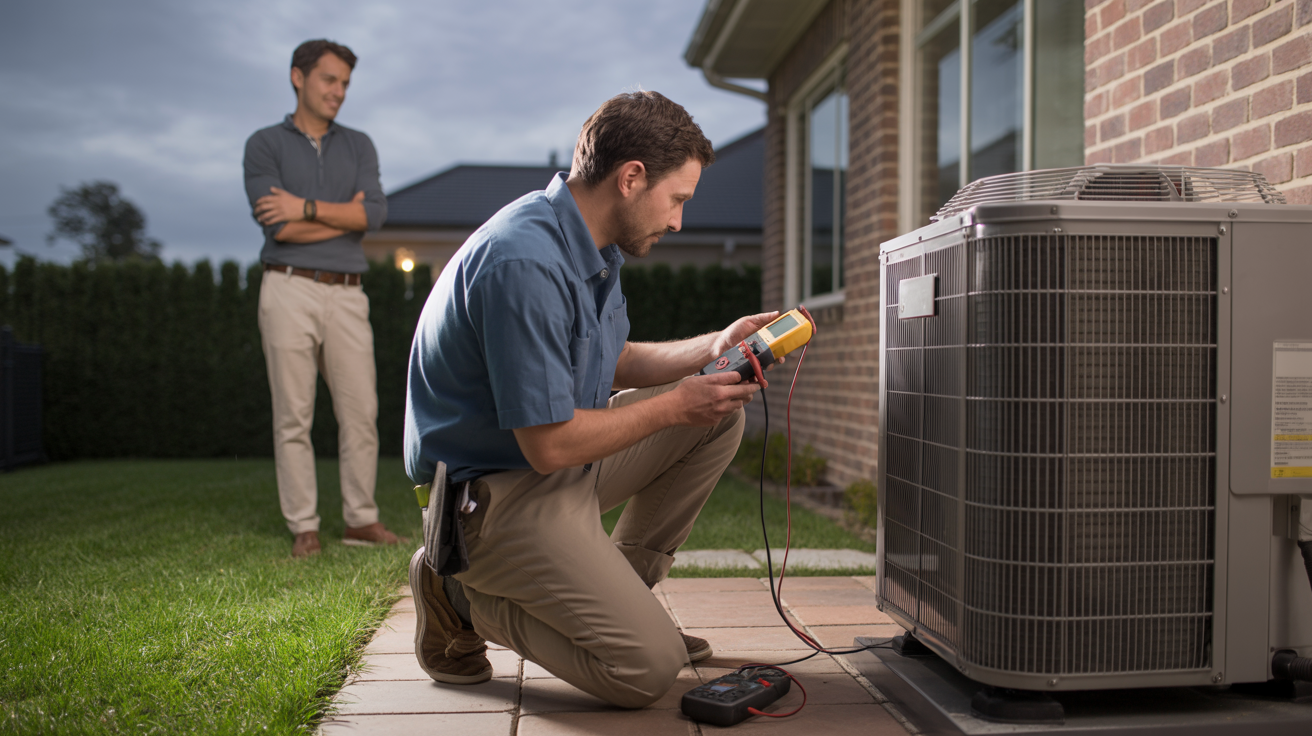
Most HVAC repairs cost $150-$500. A full system replacement costs $5,000-$25,000. The contractor standing in your living room makes more money on the replacement. Keep that in mind for the next 10 minutes.
HVAC is the worst trade for price variance. I've tracked quotes on the same repair from different companies. Same unit, same problem, same zip code. One company quoted $150. Another quoted $10,000. That's not a typo. That's a 66x difference. Roofing is bad. Plumbing is bad. HVAC is insane.
The reason is simple. Most homeowners don't understand how their system works, can't see the parts being discussed, and are usually calling because their house is either freezing or roasting. Panic pricing is the contractor's best friend.
Before you make any decision, grab the free Contractor Defense Checklist. It has the trade-specific red flags for HVAC, plumbing, roofing, and electrical in one reference card. Let me walk you through the HVAC upsell playbook.
How Much Does HVAC Repair Actually Cost?
Here's what common repairs should run in 2026:
| Repair | Typical Cost | What's Involved |
|---|---|---|
| Capacitor replacement | $150 - $300 | 20-minute job, $15 part |
| Contactor replacement | $150 - $350 | Common failure point, cheap part |
| Blower motor | $300 - $700 | Moderate labor |
| Refrigerant recharge | $200 - $600 | Depends on refrigerant type |
| Circuit board replacement | $500 - $1,200 | Higher part cost |
| Compressor replacement | $1,500 - $3,000 | Major repair, borderline replacement territory |
Compare those numbers to a full replacement at $5,000-$25,000. The gap between a $300 capacitor swap and a $12,000 new system is where the upsell lives.
The 4 Signs You're Being Pushed Toward an Unnecessary Replacement
1. They diagnose "replacement" within the first 15 minutes.
A thorough HVAC diagnostic takes 30-60 minutes. The technician should check refrigerant levels, electrical connections, airflow, thermostat calibration, and ductwork. If someone walks in, listens for 5 minutes, and says "you need a new system," they came to sell, not to fix.
2. They won't show you the failed part.
Ask to see it. A legitimate tech is happy to show you a burned-out capacitor or a corroded contactor. If they get vague or say "it's complicated," push back. "Show me what's broken and explain what it does." If they can't, you're being sold.
3. They quote the replacement before quoting the repair.
This is the tell. A good technician diagnoses the problem, quotes the repair, and only mentions replacement if the repair cost approaches 50% of replacement cost or if the system has multiple failing components. Leading with the replacement price means the business model runs on replacements, not repairs.
4. They cite age as the primary reason.
"Your system is 15 years old. It's time." That's not a diagnosis. That's a sales pitch. HVAC systems can run 15-25 years depending on maintenance. Age alone doesn't mean replacement. Performance data does.
When Replacement Actually Makes Sense
I'm not saying every replacement recommendation is a scam. I go back and forth on the repair-vs-replace threshold because every situation is different. But here's the framework I use.
Replace when:
- Repair cost exceeds 50% of replacement cost AND the system is over 12 years old
- You've had 3+ repairs totaling over $2,000 in the last 18 months
- The system uses R-22 refrigerant (phased out, refills are $100-$300/pound now)
- Efficiency is so low your energy bills have climbed 30%+ over two years
Repair when:
- Single component failure on a system under 12 years old
- First major repair on a well-maintained system
- The compressor is still strong (get a second opinion with an amp draw test)
The compressor is the heart. If the compressor is healthy, everything else is fixable for less than a replacement.
What We Tested: The Second Opinion Rule
After getting burned on a $10,000 quote for what turned out to be a $150 capacitor, I started telling every homeowner the same thing: get a second diagnostic before approving a replacement.
Not a second quote. A second diagnostic. There's a difference.
A second quote means another company comes in, hears "the first guy said I need a new system," and either agrees or undercuts the price. A second diagnostic means another technician evaluates the system from scratch without knowing what the first one said.
I've seen second diagnostics contradict the first one in about 40% of cases on replacement recommendations. That number might be higher or lower depending on your market. But 40% is enough to make the phone call.
The Deposit-and-Disappear play hits HVAC too. They ask for 40-50% upfront to "secure the equipment." Then they delay for weeks. Then they vanish. Company was registered in another state. Elderly homeowners are disproportionately targeted because they're less likely to escalate to the contractor board. $2,000-$12,000 gone.
Never put more than 10-30% down. Tie the rest to milestones: equipment delivered, installation complete, system tested.
The Exact Questions to Ask Your HVAC Tech
Before you agree to anything over $500, ask these:
- "What specific component failed, and can you show it to me?"
- "What's the repair cost vs. the replacement cost for this issue?"
- "Is this a standalone failure, or are other components at risk?"
- "What's the expected remaining lifespan if I repair instead of replace?"
- "Can I see the amp draw on the compressor?" (This tells you if the compressor is healthy. A good tech will know this number.)
Write down the answers. If the tech is evasive on any of them, that tells you something.
I put together a full trade-by-trade reference card in the Contractor Defense Checklist. It has HVAC-specific price benchmarks, the red flags by trade, and the questions to ask at every stage of the process.
What About the "Efficiency" Argument?
Contractors love to sell replacements on efficiency savings. "This new system will pay for itself in lower energy bills." Let's check the math.
A new high-efficiency HVAC system saves roughly $500-$800 per year on a typical home. A replacement costs $8,000-$15,000. That's a 10-20 year payback period. If your current system has 5-8 years of life left, the efficiency argument doesn't pencil out.
The exception: if you're still on R-22 refrigerant. Refills have gotten so expensive ($100-$300 per pound, and a system might need 5-10 pounds) that one major leak can cost more than a down payment on a new system.
Frequently Asked Questions
How do I know if my HVAC system uses R-22? Check the data plate on your outdoor unit. It lists the refrigerant type. Any system manufactured before 2010 likely uses R-22. Systems after 2010 use R-410A or newer alternatives. Your technician can confirm during a diagnostic.
Should I get a home warranty for HVAC? Home warranties cover some HVAC repairs, but the coverage is often limited and the assigned contractors aren't always the best. I've seen warranty companies send the cheapest available tech, not the best. Use the warranty as a backup, not a substitute for finding a good contractor yourself.
What's the average lifespan of an HVAC system? Air conditioners: 15-20 years. Furnaces: 15-25 years. Heat pumps: 12-17 years. These numbers assume regular maintenance. A system that's never been serviced might fail at 10 years. A well-maintained system might run 25.
Can I negotiate an HVAC replacement quote? Absolutely. HVAC replacements have a 35-50% margin in most markets. Get three quotes (from companies that don't share the same parent company), then use the lowest as your baseline. Off-season installs (spring and fall) are cheaper. Ask about manufacturer rebates and utility company incentives.
I post HVAC and contractor red flags on X regularly. Follow me at @beforeyouhire23 for quick reads that can save you thousands.
If you're facing an HVAC decision right now, don't agree to anything until you've gone through the checklist. The Contractor Defense Checklist has the HVAC-specific price benchmarks, the replacement-vs-repair decision tree, and the verification steps that catch overcharges. Download it free here.
Mike Harmon