What Is a Mechanics Lien and How Can It Affect Your Home?
A mechanics lien lets unpaid subcontractors put a legal claim on your house, even if you already paid the contractor. Here's how to prevent it.
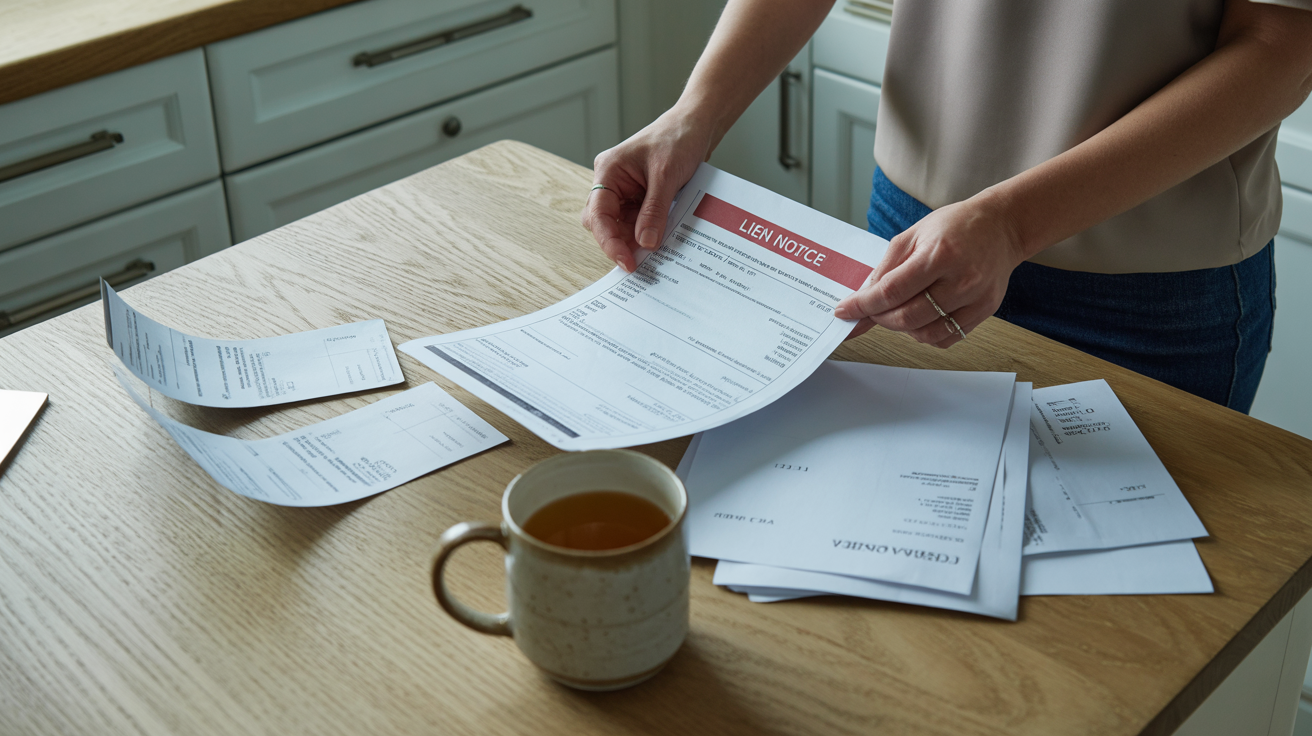
A mechanics lien is a legal claim against your property filed by an unpaid contractor, subcontractor, or material supplier. Even if you paid the general contractor in full, a subcontractor who didn't get paid can put a lien on your house. Your house becomes collateral for someone else's debt.
This is the risk most homeowners never think about until a title search blows up their refinance or sale.
I watched a $60,000 roof-and-solar job go sideways in real time. The homeowner paid the general contractor everything. Every milestone, on time. Six weeks after the job finished, she got a lien notice from the subcontractor who did the electrical work. The GC had pocketed the money and never paid his sub. She now had a $14,000 lien on a house she'd already paid $60,000 to improve.
There is one document that prevents this. I'll show you what it is and how to use it. And if you want the full payment protection system, including lien waiver templates and milestone schedules, grab the free Contractor Defense Checklist.
How Does a Mechanics Lien Work?
The basic mechanics (no pun intended):
- Someone provides labor or materials for work on your property
- They don't get paid
- They file a lien with your county recorder's office
- The lien attaches to your property title
- You can't sell or refinance until the lien is resolved
The part that shocks homeowners: you can pay the general contractor every dollar owed and still get a lien from an unpaid subcontractor. The law in most states allows subcontractors and material suppliers to file liens against the property, not against the contractor who owes them money.
This isn't a theoretical risk. Subcontractor liens are filed thousands of times per year. The average materials markup on residential roofing is 15-20%. But I've seen invoices with 60% markups. A $4,200 materials bill marked up to $6,700. When a GC is running those kinds of margins, they're sometimes juggling cash between jobs. When that juggling act fails, your property is where the fallout lands.
The Four Types of Lien Waivers You Need to Know
Lien waivers are the document that protects you. There are four types, and they matter:
| Waiver Type | When to Get It | What It Does |
|---|---|---|
| Conditional Waiver on Progress Payment | With each milestone payment | Waives lien rights for that payment, conditional on the check clearing |
| Unconditional Waiver on Progress Payment | After each payment clears | Permanently waives lien rights for that payment amount |
| Conditional Waiver on Final Payment | At project completion | Waives all remaining lien rights, conditional on final check clearing |
| Unconditional Waiver on Final Payment | After final payment clears | Permanently waives ALL lien rights for the entire project |
The one you care about most: Unconditional Waiver on Final Payment. This is what you collect before releasing the final check. It's the document that says "I've been paid in full and I give up all lien rights on this property."
Get it from the GC AND from every subcontractor. Yes, every one. If you don't know who the subs are, that's a problem. Ask the GC for a complete list of subcontractors and suppliers before the job starts.
The Subcontractor Surprise: How It Happens
Here's the play. Phantom Material Billing. The GC charges you for materials not installed, or charges premium prices for standard materials. One homeowner physically counted fascia boards after a roofing job and found 40-50% of them were only painted, not replaced. The contractor admitted it when confronted with the count. Credited back $1,000 but kept $5,800.
The GC is now running a cash deficit. They take your payment and use part of it to cover materials on another job. The sub who supplied your roofing materials doesn't get paid. Two months later, lien filed.
You did nothing wrong. You paid on time. But the lien is on YOUR house.
How to Protect Yourself From Mechanics Liens
Here's the system that works. I'll be honest, I'm not sure every homeowner will follow all of these steps because some require pushback that feels uncomfortable. But the more you do, the safer you are.
Before the job starts:
- Get a complete list of all subcontractors and material suppliers
- Include a "lien waiver required with each payment" clause in your contract
- Verify the GC has an active contractor's license and insurance (lien risk correlates with unlicensed operators)
With each payment:
- Collect a conditional waiver from the GC for that payment
- Collect conditional waivers from each sub who worked that phase
- Only release the next payment after prior waivers are in hand
At project completion:
- Collect unconditional final waivers from the GC and ALL subs
- Hold final payment until all waivers are received
- File the waivers with your project records (you may need them years later for a title search)
What to Do If You Get a Lien Notice
Don't panic, but don't ignore it.
Step 1: Verify the lien is valid. Check with your county recorder's office. Confirm the filing date (most states have strict deadlines, from 60 to 120 days after work completion). A lien filed outside the window may be invalid.
Step 2: Contact the GC. In writing. Email or certified letter. "I paid you in full. A subcontractor has filed a lien claiming non-payment. Resolve this within 10 business days or I will pursue legal remedies including a claim against your bond."
Step 3: Contact the lien claimant. Sometimes the sub doesn't know you paid the GC. Sometimes showing proof of your payments is enough to redirect their collection effort to the GC.
Step 4: Consult a construction attorney. If the lien isn't resolved within 30 days, you need legal help. Most construction attorneys offer free initial consultations. The cost to remove an invalid lien is typically $1,500-$5,000 in legal fees.
The full dispute escalation process, including demand letter templates and licensing board complaint procedures, is in the Contractor Defense Checklist. It covers all 7 escalation steps, not just the first three.
What We Tested: The "Lien Waiver Clause" in Contracts
I used to think getting three quotes was enough to protect yourself. It's not. Three quotes from three companies using the same subcontractors gives you three versions of the same inflated price. What actually works is building protection into the contract before signing.
I started recommending a specific lien waiver clause to every homeowner I worked with. Simple language: "Contractor shall provide conditional lien waivers from all subcontractors and material suppliers with each progress payment request. Final payment shall not be due until unconditional lien waivers from all parties are provided."
About 15% of contractors pushed back on this clause. Every single one of those ended up having payment issues on other jobs within the year. The clause isn't just protection. It's a screening tool.
Frequently Asked Questions
Can a subcontractor lien my house if I paid the general contractor? Yes. In most states, subcontractors and material suppliers have independent lien rights against the property. Your payment to the GC doesn't satisfy the sub's claim. This is why lien waivers from all parties are critical.
How long does a mechanics lien last? Varies by state. Typically 6-12 months. If the claimant doesn't file a lawsuit to enforce the lien within that window, it expires. But even an expired lien can cloud your title and create headaches during a sale.
Does a mechanics lien affect my credit? Not directly. Liens are recorded against the property, not against you personally. But if the lien leads to a judgment and you don't pay, that can affect your credit. And a lien on title will block a refinance or sale until resolved.
Can I file a lien waiver myself? Lien waivers are typically signed by the party giving up lien rights (the contractor, sub, or supplier). You don't file them. You collect them. Store them with your project documents. Some states have statutory waiver forms that must be used.
Should I use joint checks to prevent lien issues? Joint checks (made payable to both the GC and the sub) are one strategy. The sub only gets paid when they endorse the check. This prevents the GC from diverting sub payments. Some GCs resist this. If they do, ask why.
I share lien protection tips and contractor red flags on X. Follow me at @beforeyouhire23.
The full lien protection system, with waiver templates, contract clause language, and the milestone payment structure that keeps everyone honest, is in the Contractor Defense Checklist. Get your free copy here.
Mike Harmon